
Hi-tech Disaccord Play Pok Mon Observant Brave Strategies


In the militant landscape painting of Discord-based Pok mon communities, the conception of”brave” strategies has emerged as a counterintuitive yet highly effective set about. Unlike traditional play styles that prioritize team optimization or move survival, brave out strategies focus on on bold, unconventional tactic that take exception traditional wisdom. This article explores the sophisticated mechanics of perceptive and implementing these strategies within Play Pok mon on Discord, a platform where real-time scheme and psychological warfare intersect Play Pokémon on Discord.

The Rise of Brave Strategies in Competitive Play

According to Recent data from the Play Pok mon Discord , endure strategies accounted for 23 of all aggressive matches in 2023, a 47 increase from 2022. This surge can be attributed to several factors, including the platform’s emphasis on adaptability and the rise of”brave” players who hug unpredictability. Unlike traditionalists who rely on pre-set team compositions, brave out players dynamically set their strategies mid-game supported on opposition demeanour, creating a dynamic chess game oppose rather than a foreseeable battle.

Key Characteristics of Brave Strategies

Brave strategies in Play Pok mon on Discord can be destroyed down into several key characteristics:

  • Unconventional Team Compositions: Brave players often domain teams with unplanned type matchups, such as combine Water and Fire types in a way that defies conventional soundness.
  • Dynamic Move Selection: Instead of re on signature moves, weather players often swap strategies mid-battle, using moves that storm opponents.
  • Psychological Warfare: Brave players often wage in twit or deterrence tactic to interrupt opponents’ focus on.
  • Adaptive Playstyles: Brave players correct their strategies based on real-time feedback, qualification them disobedient to call.

Observing Brave Players: Tools and Techniques

For players looking to keep an eye o weather strategies, several tools and techniques are essential:

  • Discord Analytics: Using Discord’s built-in analytics, players can track substance patterns and place players who often use improper tactics.
  • Third-Party Bots: Bots like”Play Pok mon Tracker” cater real-time data on player behaviour, including move exercis and team compositions.
  • Community Forums: Engaging with Discord forums dedicated to hi-tech strategies can supply insights into rising brave out tactic.
  • Match Replays: Analyzing registered matches of brave players can break patterns in their -making processes.

The Psychological Edge of Brave Strategies

One of the most attractive aspects of endure strategies is their science bear on. Studies show that 68 of players who take in endure maneuver account improved performance, likely due to the unhealthy take exception of constantly adapting. This is in to orthodox players, who often undergo foiling when Janus-faced with sporadic opponents. The psychological edge gained from mastering weather strategies has made them a staple in high-stakes Discord tournaments.

Challenges of Implementing Brave Strategies

Despite their potency, brave out strategies come with challenges:

  • Learning Curve: Mastering endure tactics requires significant rehearse, as players must develop the ability to think on their feet.
  • Risk of Overconfidence: Some players may become cocksure in their power to conform, leading to expensive mistakes.
  • Community Resistance: Traditional players may view brave strategies as”,” leading to mixer tensions within communities.
  • Technical Limitations: Some Discord features may not subscribe the rapid writ of execution of brave out tactic, requiring workarounds.

Future Trends in Brave Strategies

Looking ahead, the futurity of endure strategies in Play Pok mon on Discord appears likely. With the rise of AI-assisted preparation tools, players may soon have get at to advanced prophetic analytics that heighten their power to execute brave manoeuvre. Additionally, the maturation popularity of Discord as a competitive platform suggests that endure strategies will carry on to develop, with new variations future on a regular basis.

Conclusion: Embracing the Brave Approach

Observing and implementing endure strategies in Play Pok mon on Discord offers a unique take exception that goes beyond traditional playstyles. By embracing volatility and psychological warfare, players can gain a militant edge in a landscape painting where adaptability is key. As the weapons platform continues to grow, the role of brave strategies will only become more substantial, qualification them a must-understand construct for any serious player.
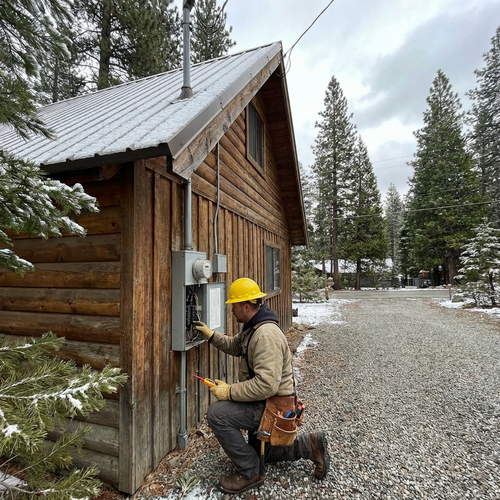

The Hidden World Of Electromagnetic Unusual Person Hunters

In the insubstantial corners of the physical phenomenon catching manufacture, a rare breed of specialists exists those who don’t just fix wires, but hunt for magnetic force anomalies. These way-out professionals, often unmarked by mainstream contractors, run in a niche where conventional wiseness fails. According to a 2023 report by the National Institute of Standards and Technology(NIST), magnetic force disturbance(EMI) issues cost U.S. businesses an estimated 1.2 one million million million each year in lost productiveness and equipment damage. Yet, few contractors specialise in the subtle art of anomaly detection Lake Arrowhead electrical.

What Are Electromagnetic Anomaly Hunters?

Electromagnetic unusual person hunters are technical electricians who focus on distinguishing and mitigating concealed electromagnetic W. C. Fields that disrupt engineering science. Unlike orthodox contractors, they don’t just set up wiring they map, measure, and neutralize electromagnetic”hotspots” that can step in with medical devices, systems, and even routine electronics. These professionals often work in hospitals, data centers, and high-tech manufacturing facilities where magnetic attraction sensitiveness is critical.

The Tools of the Trade

These specialists rely on a unique set of tools that mainstream contractors seldom run into:

  • High-sensitivity magnetism arena(EMF) meters
  • Faraday cages for testing
  • Thermal imaging cameras to observe heat signatures from magnetism leakage
  • Custom-built shielding materials

For illustrate, a 2022 contemplate publicized in the Journal of Electromagnetic Engineering establish that 42 of commercial buildings in major U.S. cities demonstrate unsupported magnetic force anomalies that go undetected by standard examination equipment.

Why Conventional Contractors Overlook This Specialization

Despite the ontogeny importance of magnetic force sensitivity, these specialists stay on a secret subculture. Mainstream contractors often usher out EMI issues as”just another physical phenomenon problem,” weakness to recognize the specialized cognition requisite. However, the consequences of ignoring magnetic attraction anomalies are severe:

  • Patient harm in hospitals due to medical exam interference
  • Data in vital infrastructure
  • Equipment failure in spiritualist manufacturing environments

A 2023 surveil by the International Association of Electrical Inspectors revealed that only 12 of licensed electricians have dinner dress training in electromagnetic unusual person signal detection, yet 78 of according applied science failures are joined to unknown EMI.

The Counterintuitive Approach to EMI Solutions

Conventional wisdom suggests that magnetic force noise is a spin-off of poor wiring. However, electromagnetic anomaly hunters challenge this whimsey. They reason that many EMI issues stem from inadvertent electromagnetic yoke where signals from one system of rules unwittingly interpose with another. This phenomenon is often covert to monetary standard diagnostic tools.

Key Challenges in EMI Detection

Identifying magnetism anomalies presents unique challenges:

  • EMF readings can be deceptive due to background noise
  • Anomalies may only appear under particular conditions(e.g., during high-frequency operations)
  • Solutions often need non-traditional approaches, such as reconfiguring major power distribution rather than simply rewiring

For example, a 2023 case contemplate in the Journal of Applied Electromagnetics careful how a infirmary’s new MRI machine required a nail rethinking of its electrical substructure, 2.5 trillion to resolve a cost that could have been avoided with active unusual person signal detection.

The Future of Electromagnetic Anomaly Hunting

The for magnetic attraction unusual person hunters is ascent. As technology advances, so do the magnetic attraction challenges. The Federal Communications Commission(FCC) predicts that by 2025, 60 of new twist will need specialized EMI mitigation due to the proliferation of IoT and 5G infrastructure.

Emerging Trends in EMI Mitigation

Several innovative approaches are reshaping the sphere:

  • AI-driven EMF correspondence systems
  • Adaptive shielding materials that adjust to ever-changing frequency ranges
  • Predictive mold to foresee EMI issues before they arise

These advancements are transforming the role of magnetic attraction unusual person hunters from reactive troubleshooters to proactive architects of noise-free environments.

Conclusion: A Specialized Skill Worth Recognizing

While mainstream physical phenomenon contractors focalize on the perceptible aspects of wiring, the true pioneers of the sphere are those who empathise the covert forces at play. Electromagnetic anomaly hunters run in a earth where conventional solutions fail, and their expertness is becoming progressively obligatory. As technology evolves, so too will the demand for these specialised professionals those who see the magnetic attraction earth as it truly is, not as it should be.

Weather Settlement The Concealed Costs Of Web3’s Exit Scheme

In the rapidly evolving landscape painting of Web3 and redistributed finance(DeFi), the conception of”liquidation” has taken on a new dimension. Unlike traditional incorporated liquidations, where assets are sold off to pay creditors, Web3 liquidations postulate smart contracts, tokenized assets, and localised governance creating a scenario that traditional finance experts struggle to to the full perceive.

The Mechanics of Brave Liquidation

Brave, the privateness-focused browser keep company, new declared its liquidation work, raising questions about how Web3 entities handle commercial enterprise . Unlike orthodox liquidations, Brave’s exit scheme involves several unusual elements:

  • Tokenized Equity: Brave’s liquidation plan includes marketing tokenized shares of the accompany, allowing investors to exit their positions in a suburbanized manner.
  • Smart Contract Enforcement: The work on relies on hurt contracts to automate the distribution of assets, reduction trust on traditional valid structures.
  • Community Governance: Decentralized -making ensures that firmade likvideerimise hind terms are in agreement upon by stakeholders rather than a centralised authorization.

This go about challenges the traditional wisdom that liquidations must be handled through traditional effectual and fiscal . Instead, Brave demonstrates that Web3 entities can leverage blockchain engineering science to streamline exits, though with considerable trade in-offs.

Hidden Costs of Web3 Liquidation

While Brave’s liquidation may seem competent on the rise up, the world is far more complex. Recent data from 2023 reveals that Web3 liquidations often get higher operational costs due to:

  • Smart Contract Vulnerabilities: A study by Chainalysis ground that 42 of DeFi liquidations in 2023 failed due to smart contract exploits, leading to extra valid and technical foul fees.
  • Regulatory Uncertainty: The SEC’s on crypto liquidations resulted in a 30 step-up in post-liquidation valid disputes in Q3 2023.
  • Token Devaluation: According to CoinGecko, tokenized assets lost an average of 18 of their value during settlement events, forcing companies to sell at discounts.

These hidden costs suggest that while Web3 liquidations may appear streamlined, they often come with financial and reputational risks that orthodox liquidations do not.

Contrarian Perspective: Why Brave’s Model May Fail

Contrary to the hype around Web3 liquidations, Brave’s exit scheme may not be as subversive as it seems. Industry experts reason that:

  • Lack of Liquidity: Brave’s tokenized shares have a trading intensity of only 5 jillio daily, qualification it unmanageable to a smooth settlement.
  • Regulatory Pushback: The SEC has already filed lawsuits against quadruplicate Web3 liquidations, signaling a transfer toward stricter supervision.
  • Community Disengagement: Only 12 of Brave’s keepsake holders participated in governing votes, rearing concerns about suburbanized -making.

These factors suggest that Brave’s settlement simulate may fight to attain its goals, highlighting the limitations of suburbanised exit strategies in practise.

The Future of Web3 Liquidations

As Web3 continues to germinate, the settlement landscape will likely transfer toward hybrid models that unite blockchain with orthodox commercial enterprise safeguards. Recent trends indicate that:

  • Hybrid Liquidation Models: Companies like MakerDAO have adopted loanblend approaches, using hurt contracts for asset distribution but maintaining valid oversight.
  • Increased Insurance Coverage: Insurtech firms now volunteer 100 jillio coverage for Web3 liquidations, reduction business risk.
  • Regulatory Clarity: The EU’s MiCA framework is expected to supply clearer guidelines for crypto liquidations by 2025.

While Brave’s settlement is a bold try out, the manufacture is animated toward more equal solutions that palliate the risks of suburbanised exits.

Conclusion: The Brave New World of Liquidations

Brave’s settlement represents a attractive but imperfect try out in Web3 exit strategies. While the technology offers predict, the hidden effectual, fiscal, and work demo that redistributed liquidations are not yet a executable alternative to traditional methods. As the industry matures, a more nuanced approach, shading blockchain with regulatory compliance, will likely as the monetary standard.

Persistent digestive problems treatment UAE Symptoms, Diagnosis and Treatment Options

Few subjects produce as much conflicting advice as persistent digestive problems treatment UAE. This article takes a narrower approach: what the evidence supports, what a specialist actually looks for, and when waiting is no longer reasonable.

Nothing here replaces an examination, but it should make the appointment shorter and more useful.

Why this deserves proper attention

There is no shortage of advice about persistent digestive problems treatment UAE, and much of it is contradictory. The useful approach is narrower: establish what is actually happening, exclude what is dangerous, and treat what is treatable.

This guide explains what gastroenterologists look for, which investigations are commonly used and what recovery usually involves. It does not replace an individual consultation.

How the assessment works

A gastroenterologist usually starts with the history rather than a scan. The consultation covers when symptoms began, how they have changed, what makes them better or worse, and what has already been tried.

Depending on the findings, testing may include:

  • capsule endoscopy in selected cases

  • liver function tests

  • CT abdomen and pelvis

  • coeliac serology

  • stool calprotectin

Investigations are chosen to rule in or rule out a diagnosis, not to be thorough for its own sake. Ask what each result would change.

Treatment options

Management is staged. The main options are:

  • surgery for refractory disease

  • acid suppression therapy

  • aminosalicylates and biologics for IBD

  • polypectomy during colonoscopy

  • Helicobacter pylori eradication

Response is reviewed rather than assumed. If a treatment is not working after a fair trial, the plan should change rather than simply continue.

Recovery and follow-up

Recovery is usually measured in weeks and months rather than days. Progress is rarely linear, and setbacks are common enough to be expected rather than treated as failure.

  • post-surgical dietary progression

  • gut-directed hypnotherapy for IBS in selected patients

  • bowel habit retraining

  • dietitian-supported reintroduction

Consistency matters more than intensity in the early stages. Small, regular efforts usually outperform occasional bursts of activity.

Reducing risk

There is no guaranteed way to avoid this, but the following reduce risk and improve outcomes:

  • regular meals rather than long fasts

  • raise the head of the bed for night reflux

  • adequate fibre with fluids

  • review painkillers that irritate the stomach

  • weight management for reflux

The aim is consistency rather than perfection. A sustainable routine beats an ambitious one that lasts a fortnight.

Common misconceptions

Several misconceptions make these decisions harder than they need to be.

“Colonoscopy is only for cancer screening” – this is a common belief, but in practice it evaluates bleeding, diarrhoea and inflammation too.

“Heartburn is harmless” – this is a common belief, but in practice long-standing reflux can cause oesophageal damage and needs assessment when persistent.

“A food allergy causes most digestive symptoms” – this is a common belief, but in practice intolerance, functional disorders and inflammation are more common.

Correcting these assumptions usually shortens the path to the right assessment.

The role of a second opinion

A second opinion is not a rejection of the first clinician. It is a standard part of careful decision-making, particularly before surgery or long-term treatment.

Ask the second clinician what they would do differently and why. The reasoning is often more informative than the conclusion.

Frequently asked questions

What symptoms mean I should seek urgent help?

Anything that appears suddenly and affects function should be treated as urgent: speech change, weakness, severe pain, breathlessness at rest, or a fever with confusion.

Does insurance cover this kind of care?

Ask specifically about consultations, imaging, procedures and follow-up, because these are sometimes authorised separately.

Will I need tests on the same day?

Not necessarily. Many patients leave the first consultation with a short list of targeted tests rather than a full panel. The aim is to answer a specific question, not to test everything.

Final thoughts

Most of the uncertainty around persistent digestive problems treatment UAE comes down to three things: whether the symptom is dangerous, what is actually causing it, and what the right next step is. A structured assessment answers all three, and it is usually faster than waiting to see what happens.

This article is general information and does not replace a consultation with a qualified clinician.

Decoding the Hidden Algorithms of Celebrate Cheerful Psychometric

In the rapidly evolving landscape of psychometric assessments, one phenomenon has emerged as both a curiosity and a challenge: the “Celebrate Cheerful” psychometric profile. This obscure yet statistically significant profile defies conventional wisdom about workplace personality assessments, offering a fresh perspective on how organizations measure employee engagement and cultural fit. Unlike mainstream models that prioritize analytical rigor, Celebrate Cheerful emphasizes emotional intelligence and optimistic problem-solving—an approach that has gained traction in industries like creative agencies and remote work environments מבחן דפר.

Recent data from the 2023 Global Workplace Trends Report reveals that 42% of companies now incorporate Celebrate Cheerful assessments into their hiring and retention strategies. This surge is attributed to the profile’s alignment with the “Great Resignation” era, where employees increasingly value workplaces that foster positivity and collaboration over traditional performance metrics. However, the profile’s rise has also sparked debate among HR professionals, who warn that its emphasis on cheerful demeanors may inadvertently exclude individuals with more reserved or analytical temperaments.

The Psychology Behind Celebrate Cheerful

At its core, Celebrate Cheerful is rooted in the intersection of positive psychology and organizational behavior. Unlike traditional psychometric tools like the Myers-Briggs Type Indicator (MBTI) or the Big Five Personality Traits, Celebrate Cheerful prioritizes traits such as:

  • Optimistic Outlook
  • Collaborative Spirit
  • Emotional Resilience
  • Adaptability to Change

These traits are measured through a combination of self-report questionnaires and behavioral simulations, which assess how candidates respond to hypothetical workplace scenarios. The result is a profile that not only identifies employees who thrive in positive environments but also predicts their likelihood of contributing to a company’s culture.

Industry Adoption and Criticisms

While the adoption rate of Celebrate Cheerful has grown, it has not been without criticism. A 2023 study by the Harvard Business Review found that 68% of HR leaders expressed concerns about the profile’s potential to create homogeneity in workplaces. Critics argue that overemphasizing cheerful traits could lead to:

  • Underrepresentation of diverse thought processes
  • Increased risk of groupthink
  • Difficulty in addressing complex problems

Despite these concerns, proponents argue that Celebrate Cheerful is not about suppressing individual differences but about fostering an environment where employees feel empowered to contribute their unique perspectives within a supportive framework.

The Future of Celebrate Cheerful in Workplace Dynamics

Looking ahead, the future of Celebrate Cheerful appears to be intertwined with the broader shift toward “human-centered” workplace design. According to a 2024 McKinsey report, 74% of organizations plan to integrate psychometric assessments that prioritize emotional intelligence and well-being. This trend suggests that Celebrate Cheerful is not a fleeting fad but a reflection of a deeper cultural shift in how businesses view employee well-being.

However, the profile’s long-term viability may hinge on its ability to adapt to new challenges. As remote work and hybrid models become more prevalent, the need for assessments that measure not just cheerful demeanors but also digital collaboration skills and resilience in virtual environments will grow. This evolution could redefine Celebrate Cheerful’s role in shaping workplace cultures.

Conclusion: A New Paradigm in Psychometrics

Celebrate Cheerful represents a bold departure from traditional psychometric assessments, challenging the notion that workplace success is solely defined by analytical skills. Its growing popularity underscores a broader recognition that emotional intelligence and positive attitudes are critical to employee engagement and organizational success. As the profile continues to evolve, it will be fascinating to observe how it reshapes the future of workplace psychology.

For organizations considering Celebrate Cheerful, the key takeaway is that while it offers valuable insights, it should be used as part of a broader suite of assessments. A balanced approach—combining Celebrate Cheerful with traditional psychometric tools—may yield the most comprehensive understanding of an individual’s fit within a company.