
As a developer, you’re likely no stranger to the importance of viewership numbers on streaming platforms like YouTube. But have you ever stopped to think about how you can programmatically control and automate those numbers? That’s where Kick Viewbot APIs come in – a game-changer for developers looking to streamline their workflow. By integrating with Kick Viewbot, you’ll be able to make API requests that interact with YouTube’s API on your behalf, giving you the flexibility to retrieve view counts or update video titles with ease. But how exactly does this integration process work, and what benefits can you expect to see?
Understanding Kick Viewbot APIs
Most developers have likely encountered situations where they need to artificially inflate their viewership numbers on streaming platforms, and that’s where Kick Viewbot APIs come in buy kick followers.
You’re probably wondering what these APIs do and how they can help you. Essentially, Kick Viewbot APIs allow you to programmatically control and automate viewership numbers on streaming platforms like YouTube, Twitch, or Facebook Gaming.
This means you can simulate real viewers, increase your channel’s visibility, and even manipulate your stream’s ranking.
You might be thinking, “Isn’t this against the terms of service?” And you’re right; artificially inflating viewership numbers is against most platforms’ policies.
However, Kick Viewbot APIs are designed to avoid detection by using advanced algorithms and techniques to mimic real viewer behavior. This way, you can safely boost your channel’s popularity without risking your account.
Before integrating Kick Viewbot APIs into your project, it’s essential to understand the risks involved and ensure you’re using them responsibly.
Key Features and Benefits
Several key features make Kick Viewbot APIs a powerful tool for boosting your streaming channel’s visibility.
You can increase your viewership and engagement by simulating live views, which helps to attract more organic viewers. The APIs also provide flexibility in customizing the viewbot experience, allowing you to set specific viewer counts, duration, and intervals.
This flexibility enables you to create a realistic and engaging streaming experience for your audience.
The Kick Viewbot APIs also offer robust analytics and reporting, providing you with valuable insights into your streaming performance.
You can track your viewer growth, engagement metrics, and other key performance indicators to refine your streaming strategy. Additionally, the APIs support multiple platforms, including YouTube, Twitch, and Facebook Gaming, making it easy to manage your streaming presence across different channels.
Setting Up API Keys
To get started with Kick Viewbot APIs, you’ll need to set up API keys, which serve as unique identifiers that authenticate your API requests and grant access to the platform’s features.
This step is crucial in ensuring the security and integrity of your API interactions.
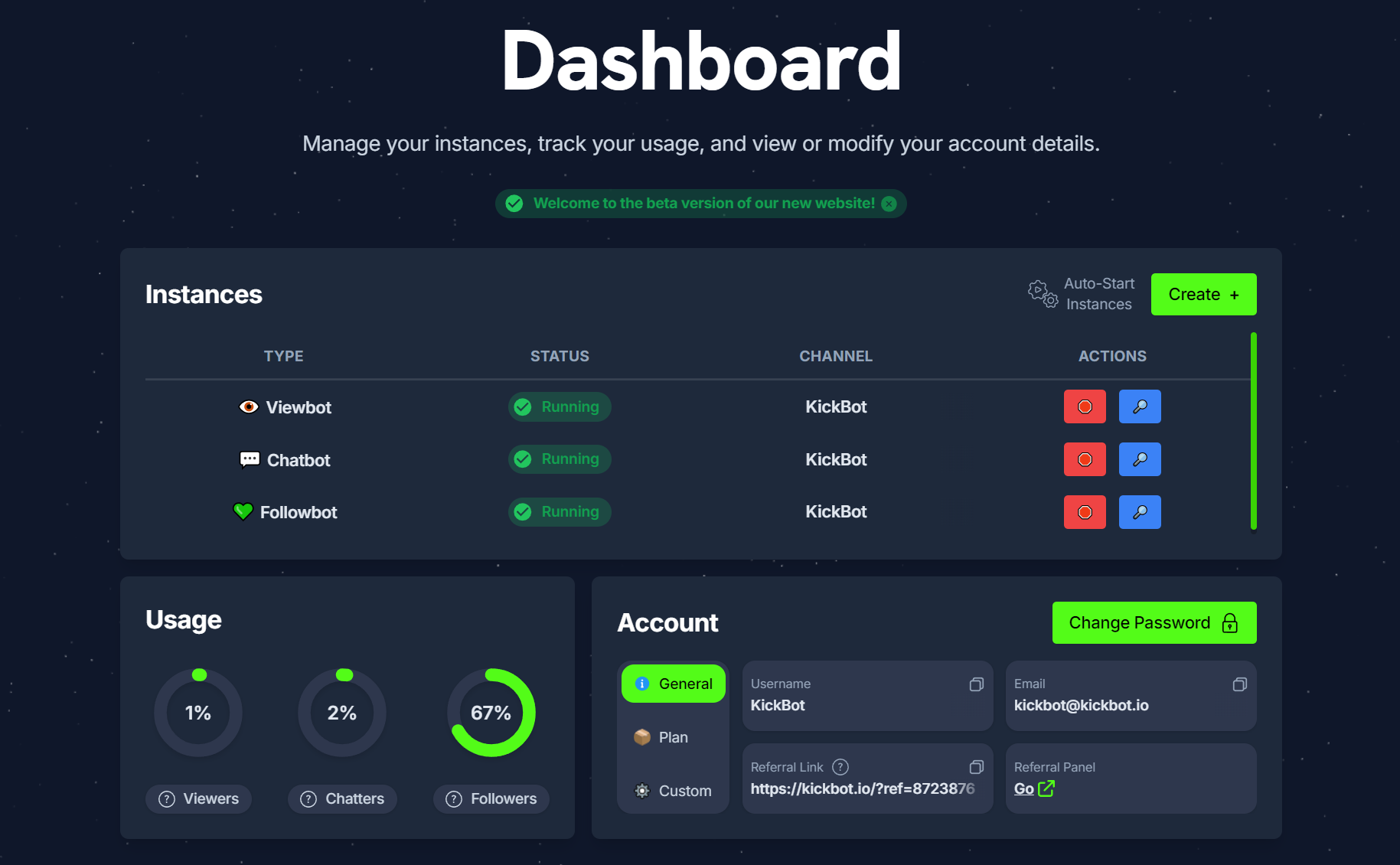
To set up your API keys, log in to your Kick Viewbot account and navigate to the API dashboard.
From there, click on the “Create API Key” button and follow the prompts to generate a new key.
You’ll be asked to provide a name for your API key and select the permissions you want to grant.
Be sure to store your API key securely, as it will be used to authenticate all API requests from your application.
Remember to keep your API key confidential to prevent unauthorized access to your account.
If you suspect your API key has been compromised, you can revoke it at any time from the API dashboard.
Integration Process Explained
You’ve set up your API keys, and now you’re ready to integrate Kick Viewbot APIs into your application.
The integration process involves making API requests to our servers, which will then interact with YouTube’s API on your behalf. You’ll need to choose the specific API endpoints you want to use, such as retrieving view counts or updating video titles.
When making API requests, ensure you’re using the correct HTTP method (GET, POST, PUT, or DELETE) and include the required parameters in your request body or query string.
You’ll also need to authenticate your requests by including your API key in the request headers or query string. Once you’ve sent a request, our servers will process it and return a response in JSON format.
You can then parse this response to retrieve the desired data or update your application accordingly. If you encounter any issues during integration, refer to our API documentation for troubleshooting guidance or contact our support team for assistance.
Best Practices for Developers
Your API integration is underway, and now it’s crucial to follow best practices to ensure seamless communication with Kick Viewbot APIs.
You’ve made significant progress, and these guidelines will help you avoid common pitfalls and optimize your integration.
Firstly, handle errors and exceptions correctly. Implement robust error handling mechanisms to prevent your application from crashing or malfunctioning when encountering API errors.
You should also log errors and exceptions to diagnose and debug issues efficiently.
Next, use efficient API calls to minimize latency and reduce the load on your servers.
Batch API requests when possible, and use caching to store frequently accessed data. This will help you conserve bandwidth and improve overall performance.
Lastly, ensure you’re complying with Kick Viewbot’s API terms of service and usage guidelines.
Familiarize yourself with the API’s rate limits, and implement measures to prevent abuse or misuse.
Conclusion
You’ve made it to the end of this API integration journey! Now, you’re equipped to harness the power of Kick Viewbot APIs to automate and control viewership numbers on streaming platforms. Remember to follow best practices, authenticate your API keys correctly, and choose the right endpoints for your needs. With these APIs, you can focus on building innovative solutions while leaving the heavy lifting to Kick Viewbot. Happy coding!